
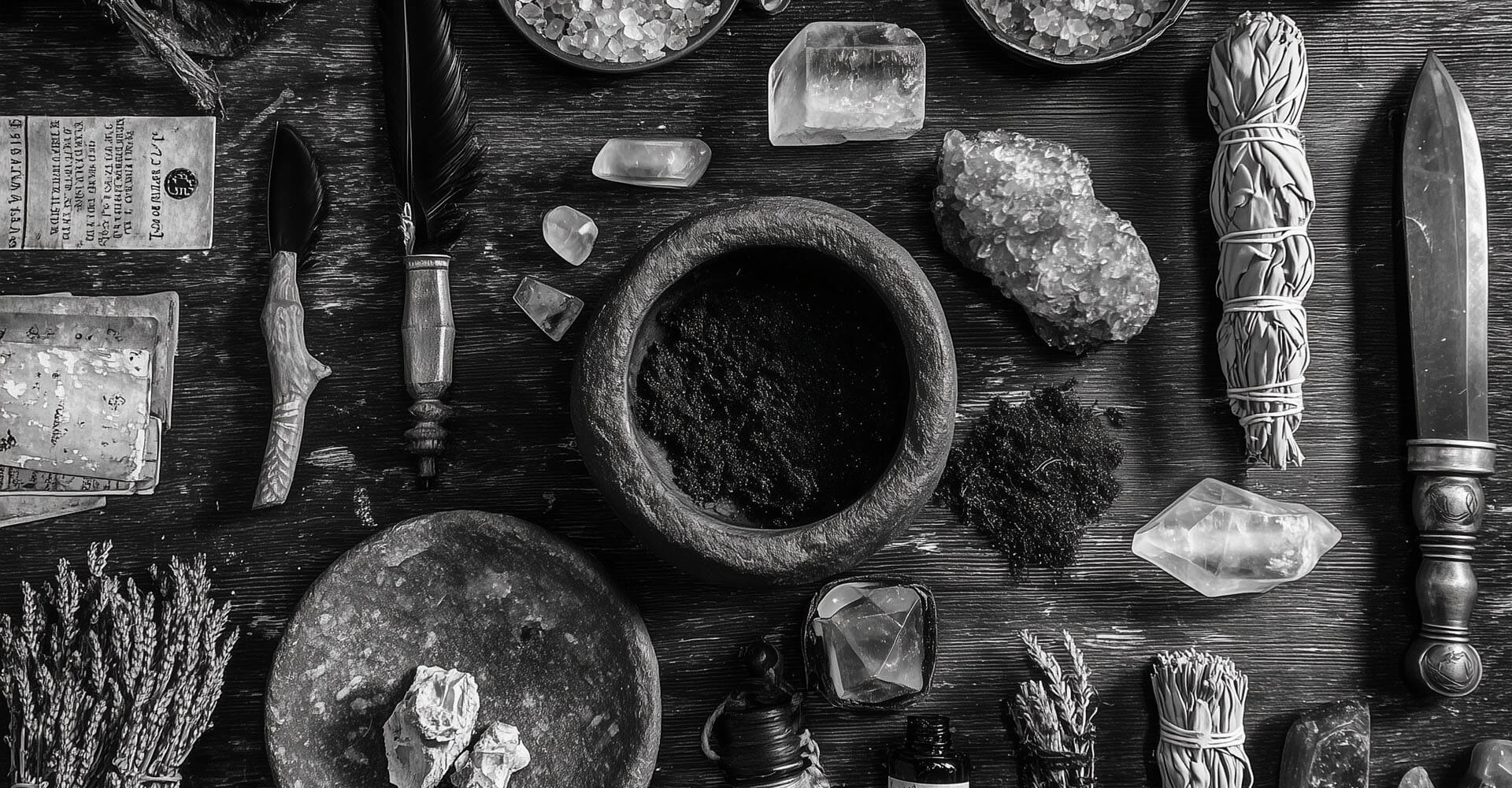
Magic serves as both the power source and the overall discipline—an art of transformation or creating change. More broadly, magic is a comprehensive system that encompasses the philosophy, methods, and spiritual frameworks for working with unseen forces to manifest desired outcomes and bring about transformation.
Origins of the Word
The word magic traces back to the ancient magi/, priestly sages of Persia whose knowledge of stars, symbols, and ritual seemed to open doors to the divine. The Greeks called it magikē technē — the “art of the magi” — a phrase that already hinted at mystery, power, and the ability to reshape destiny.
Faces of Magic
At its core, magic is about *shaping reality (or the perception of reality) in ways that feel extraordinary, mysterious, or impossible.
“Magic” can mean different things depending on context:
Ritual and Spiritual
Magic has long been entwined with ritual: incantations chanted beneath the moon, symbols carved in stone, offerings laid at sacred altars. To some, it is a path of communion with the divine; to others, a way of harnessing unseen currents of energy. From the dances of shamans to the alchemy of philosophers, ritual magic seeks to awaken what lies beyond human sight.
Performance and Illusion
In the hands of magicians and illusionists, magic becomes a spectacle of wonder. Sleight of hand, vanishing acts, levitations, and escapes are crafted not to summon hidden powers, but to remind audiences of how easily perception can be enchanted. Here, magic is not supernatural, but it still leaves the heart racing with awe.
In Story and Myth
In folklore and legend, magic is the lifeblood of enchanted forests, the weapon of witches and wizards, the breath of dragons, and the spark that turns ordinary objects into treasures. It is woven through the Arthurian tales, whispered in fairy stories, and painted anew in modern works of fantasy, from Tolkien’s Middle-earth to the enchanted halls of Hogwarts.
The Magic of Life
Beyond ritual or performance, magic also describes those rare moments that defy reason yet fill us with awe: the spell of first love, the glow of dawn breaking over a silent sea, the way a story can transform the soul. Such “magic” lives not in ritual, but in the human heart’s response to beauty and wonder.
Magic Through the Ages
- Ancient Civilizations: In Egypt, Babylon, and Greece, magic was inseparable from religion, medicine, and the stars. Priests and healers invoked it as both science and sacred rite.
- The Middle Ages: In Europe, magic fell under suspicion, feared as witchcraft and punished as heresy, yet it survived in folklore and secret traditions.
- The Renaissance: The age of alchemists and philosophers revived interest in hidden knowledge, blending magic with art, science, and spiritual questing.
- Modern Times: Stage magicians transformed wonder into entertainment, while occult and spiritual movements—such as Theosophy and Wicca—reclaimed magic as a personal path of mystery and meaning.
The Living Presence of Magic
Today, magic thrives in many forms: as sacred ritual, as dazzling illusion, as metaphor for beauty, and as a timeless theme in art and story. Whether found in the pages of fantasy novels, on the stage of a theater, or in the quiet moments when life itself feels enchanted, magic endures as humanity’s way of reaching beyond the visible world—toward possibility, mystery, and awe.