
“To work a spell is to weave a single thread; to perform a ritual is to weave a tapestry. Ritual is the rhythm of magic, binding intent with action, body with spirit, and mortal with divine.”
A ritual is a broader, structured practice that creates sacred space, aligns your energy, and connects you with the universal spirit. Rituals invoke this higher power to strengthen and focus intention. Think of rituals as ceremonies — holistic experiences that deepen connection and amplify desire into manifestation.
Rituals are not merely habits. They are deliberate sequences of actions, words, and symbols performed with intention. Each act carries symbolic meaning, framing and empowering spiritual work. Rituals may invoke divine presence, celebrate life changes, foster healing, or direct energy toward a clear purpose.
Often spiritual or ceremonial in nature, rituals create a bridge between the visible and the invisible — between the inner self and the universal forces around us. Whether religious, cultural, magical, or personal, rituals shape meaning, mark transitions, and amplify the energy we wish to manifest.
When we make our desires clear and channel energy toward them, we begin the process of manifestation.
The Nature and Power of a Ritual
A ritual is a sacred pattern, repeated not out of habit but with meaning. It is the way spirit is brought into action — a bridge between the seen and unseen, shaping raw intent into living power. Through rhythm, symbol, and act, the practitioner aligns with cosmic forces, turning thought into manifestation.
Rituals are ceremonial practices that frame and empower spiritual work. They focus their intention, invoke the universal spirit, and transform raw desire into manifestation. Unlike a spell — which is a single, focused act — a ritual is a complete framework. It creates sacred space, aligns energy, and establishes a direct connection between intention and outcome.
A ritual may include spells, or none at all, but it always carries symbolic meaning expressed through repeated actions, words, and tools. It is a practice set apart from the ordinary — strengthening intention and deepening our connection to the unseen.
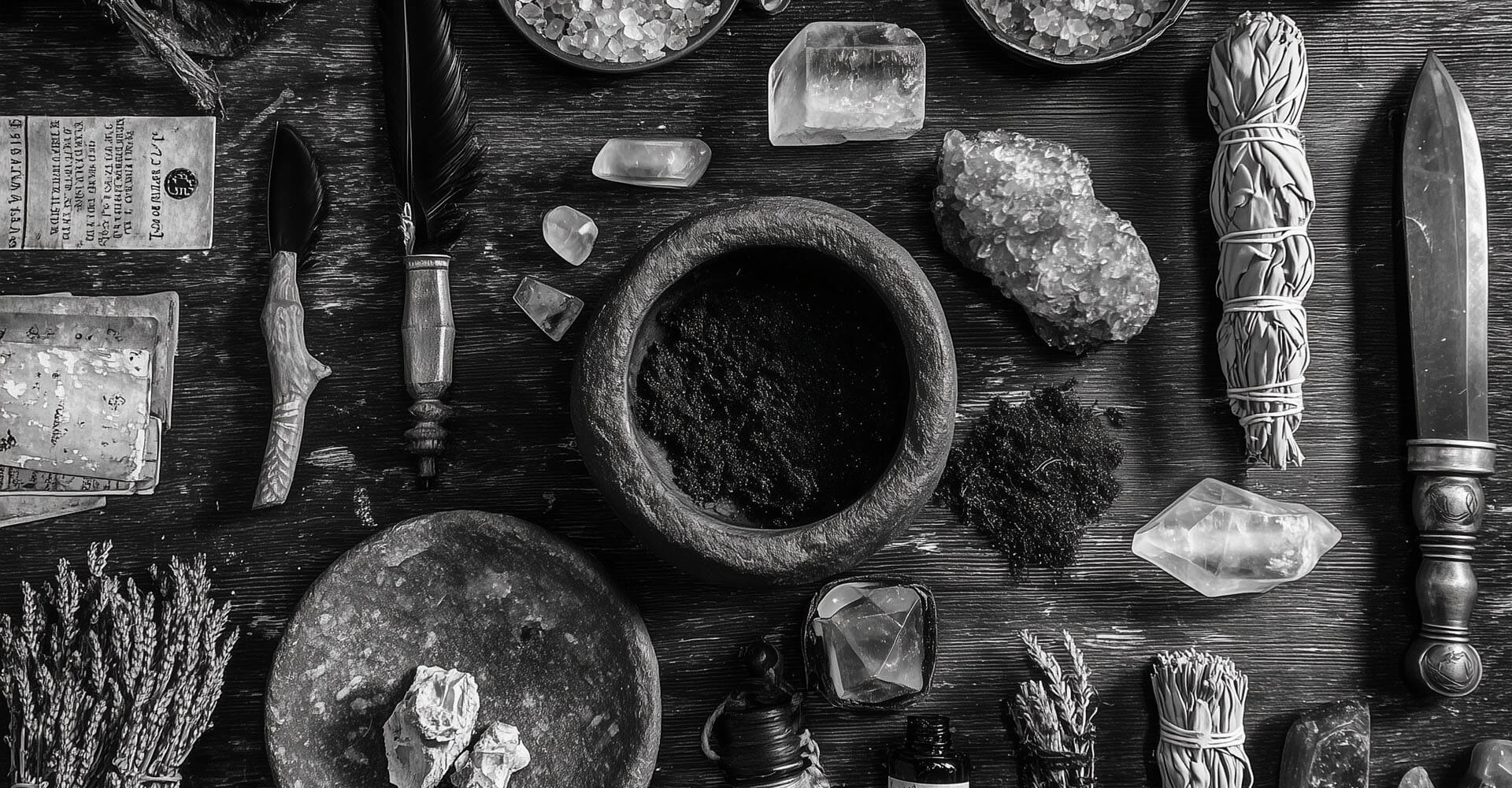
Through visual and energetic tools — chants, candles, crystals, herbs, oils, affirmations, or simple gestures — the practitioner gives form to desire and is invited into transformation. These tools help visualize, amplify, and channel energy, guiding intention into authentic change.
Types of Rituals
Rituals come in various forms, each serving unique purposes and embodying different aspects of spiritual and cultural life.
Religious Rituals
These are the most recognized form of ritual, central to many faiths.They include acts of devotion and spiritual practice such as worship, prayer, offerings, sacraments, and pilgrimages—connect practitioners with divine forces and sacred traditions.
Life-Cycle Rituals
These rituals mark and celebrate significant transitions in an individual’s life, from birth and initiation to marriage, death, and mourning, guiding individuals through life’s most profound moments.They provide a framework for navigating major life changes.
Seasonal & Agricultural
Tied to the natural world and cycles of seasons, these rituals often celebrate events crucial to survival and community well-being. These can include solstice festivals, harvest feasts, and planting ceremonies to express gratitude and hope for future prosperity.
Healing & Protection
These rituals are performed to restore well-being or to safeguard against harm. They are found in many cultures and can range from traditional healing ceremonies to personal practices intended to bring good luck. They often involve symbolic actions aimed at purifications, blessings, and warding ceremonies against misfortune—they aim to restore balance and safeguard well-being.
Magical & Esoteric
These rituals include practices often associated with specific traditions or secret societies. They are typically performed with the intention of influencing events or communicating with spiritual forces. Examples of practices such as circle casting, consecrations, spellwork, and initiations focus on harnessing unseen energies for specific intentions.
Everyday Rituals
Rituals also exist in our daily lives as personal or cultural habits. They can be simple yet meaningful routines, like morning or evening routines, the way people greet each other, or the use of specific symbolic gestures in conversation. They are infused in daily life with sacred meaning, grounding us in mindfulness and intentionality. These everyday actions can also help create order and meaning in our lives.
The Elements of Ritual
Time
Rituals are anchored in time, often following specific moments in a calendar or cycles. They are frequently synchronized with natural rhythms like lunar, solar, or seasonal cycles, such as solstices and equinoxes. This timing connects the human activity to the cosmic or natural world, attaching the ritual with a sense of regularity and cosmic significance.
Chosen with care the practitioner often aligns with lunar or moon phases, seasons, solstices, or sacred hours (e.g., midnight, dawn) when energies are strongest.
Space
Rituals often take place within a defined space, which is often set apart as sacred or special. This can be a grand structure like a temple or shrine, a natural formation, or a smaller, designated area such as a circle or a personal altar. This separation of space helps to focus the participants’ attention and signifies that the actions performed within it are not part of everyday life.
The practitioner defines and consecrates—be it a circle, altar, or sacred site—set apart from the ordinary.
Action
The core of any ritual is action, which includes a series of prescribed, often repetitive, gestures. These can range from lighting candles and chanting to bowing or performing a dance. The repetition of these actions helps to create a meditative state and reinforces the purpose of the ritual in the minds of the participants.
The practitioner uses repetitive symbolic gestures (lighting candles, bowing) chants, movements, each performed with intention.
Tools
Rituals utilize specific objects that are imbued with symbolic meaning. Practitioners use these tools in ceremonies, symbols representing deities or concepts, offerings given to spiritual entities, or special costumes and garments. The use of these objects helps to tell the story of the ritual and enhance its sensory experience.
A practitioner may use wands, chalices, blades, candles, amulets, talismans, herbs or signs and wear specific attire or costumes—symbols that awaken the spirits they represent.
Sacrifice
An element in many rituals is sacrifice. This is a symbolic offering given to balance an exchange of energies. For example, burning an incense, giving up a habit or belief, and even prayers can be offerings. Overall, these represent the deliberate release of something valuable to attain greater good.
A practitioner may provide an offering to balance the exchange of energies. They are often a symbolic offering—lighting incense, abstinence, prayer—as an energetic exchange.
Community or Solitude
Rituals are powerful tools for building and maintaining communities or cultures. They are often shared events where the shared participation reinforces group identity, social cohesion, and a sense of belonging. The collective experience strengthens bonds between people and perpetuates cultural traditions. Additionally, this holds true whether the ritual occurs in a large public ceremony or a small family gathering.
Practitioners can perform rituals in solitary or collectively. Shared participation reinforces group bonds and identity.